Brand Name:
Greef
Certification:
CE
Model Number:
Hybrid System
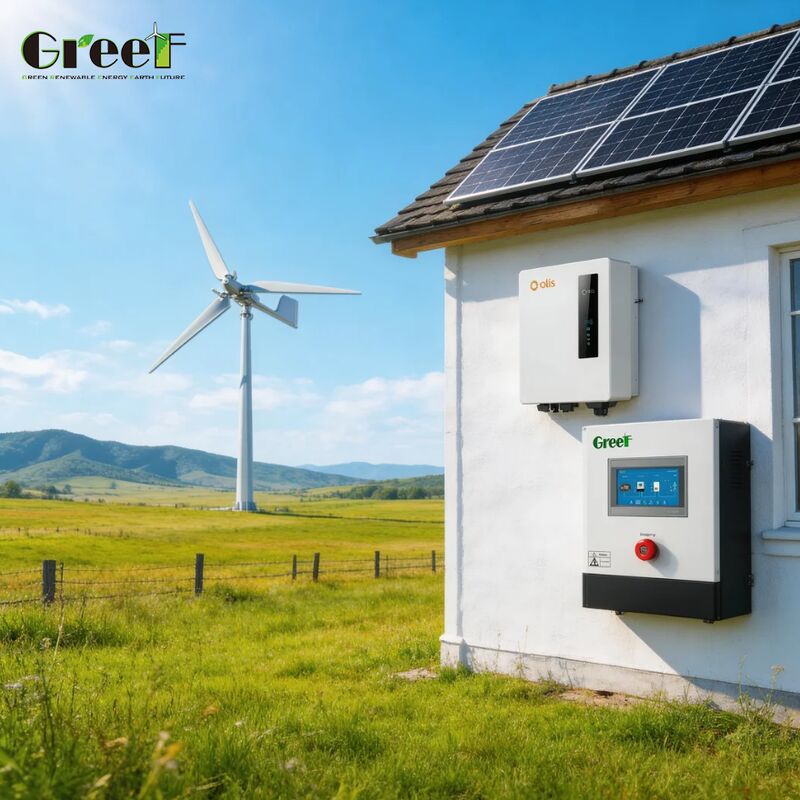
The concept of time-scale complementarity plays a significant role in optimizing renewable energy generation. Solar power production reaches its peak during daylight hours, whereas wind speeds tend to be higher at night. In addition, summer months offer abundant sunshine, while winter provides stronger wind conditions. This complementary behavior helps to smooth the overall energy generation curve and mitigates the grid fluctuations caused by relying solely on one energy source.
Another important aspect is the synergy between resource availability and land utilization. Photovoltaic (PV) panels perform exceptionally well in areas with abundant sunlight, such as plains and deserts. Conversely, wind turbines achieve their best performance on elevated terrains like ridges, coastal regions, or highlands. By strategically combining these two technologies in a shared layout, it is possible to maximize both land use efficiency and the exploitation of favorable meteorological conditions.
At the system level, integration brings further advantages. Wind and solar hybrid plants can share infrastructure components such as substations, transmission lines, and operations and maintenance teams. Additionally, integrating energy storage solutions—like batteries or pumped hydro storage—enables these hybrid plants to produce a more stable and reliable power output. This stability allows them to operate with output characteristics closely resembling those of traditional power plants.
This integrated approach is commonly referred to as a Wind-Solar-Storage Integrated System. It serves as a fundamental building block in the development of modern, clean energy power systems, paving the way toward a sustainable and resilient energy future.
The output from standalone wind or photovoltaic (PV) systems tends to fluctuate due to varying weather conditions. However, in a hybrid system that integrates both energy sources, the likelihood of both wind and solar resources being unavailable simultaneously is significantly reduced. This leads to a notable decrease in power fluctuations, thereby alleviating the stress on grid frequency regulation.
Hybrid systems allow for shared infrastructure such as land, substations, transmission lines, and maintenance teams. For instance, PV panels can be strategically installed between wind turbines within the same site. This “above-wind, below-solar” approach to land use enhances the energy output generated per unit area, maximizing resource efficiency.
Utilizing advanced forecasting and dispatch algorithms enables real-time adjustments of the wind and solar contributions to closely align total energy output with demand. Coupled with energy storage solutions, surplus energy can be stored and later released when required, thereby reducing wastage and curtailment issues.
By sharing facilities for grid connection, operations and maintenance (O&M), and monitoring platforms, hybrid systems reduce both capital and operational expenditures. Additionally, the more consistent and stable energy output often results in better electricity pricing and grants higher priority in power market dispatch mechanisms.
Hybrid energy systems play a critical role in minimizing reliance on fossil fuels while generating electricity without carbon emissions. When developed on degraded lands—such as deserts, mining subsidence areas, or barren hills—they simultaneously foster ecological restoration along with energy production, offering significant environmental and social advantages.
| Power Source | Solar And Wind System |
| Controller Type | MPPT |
| Installation Type | On-grid And Off-grid Hybrid System |
| Application | Home / Commercial / Industry |
| Interfaces | RS485 / CAN / USB |
| Mounting Type | Roof Mounting / Ground Mounting |
| Operating Altitude | 4000m ( >3000m Derating ) |
| Packing | Standard Wooden Box |
| Efficiency | 95% |
These projects serve as the flagship initiatives, predominantly situated in the northern, western, and northeastern regions of China, commonly referred to as the “Three North” area. National-level mega-bases constructed in deserts, Gobi expanses, and wastelands typically integrate wind power, solar energy, and energy storage solutions. Often, coal is used as a flexible backup source. These bases transmit clean electricity to major load centers through ultra-high voltage (UHV) transmission lines, ensuring efficient and large-scale power delivery.
In remote and off-grid locations such as islands, mountain villages, and border outposts, small to medium-sized hybrid energy systems equipped with storage units—and occasionally diesel backups—offer round-the-clock clean electricity. This approach guarantees energy access even in isolated regions.
Industrial parks and commercial campuses benefit from on-site generation facilities, including wind turbines and rooftop photovoltaic panels. These sites operate under a model of self-generation with surplus energy fed back into the grid, which substantially reduces overall energy costs.
In rural and agricultural areas, hybrid systems are integrated with greenhouses, fish ponds, and grazing lands. This setup not only supports agricultural production but also generates additional income opportunities for local communities, promoting sustainable development.
Numerous remote telecommunications towers rely on wind-solar hybrid power systems. These installations eliminate the need for lengthy transmission lines and help lower maintenance expenses through localized clean energy generation.
In countries along the Belt and Road with underdeveloped power grids, wind-solar-storage microgrids are extensively deployed. These systems provide dependable, clean electricity and reduce the reliance on diesel generators, thereby supporting greener and more resilient energy infrastructures in developing regions.
Greef offers comprehensive product customization services for our Hybrid Solar System, model number Hybrid System. Originating from China and certified with CE, this hybrid wind solar generator is designed to meet diverse energy needs with high efficiency and reliability.
Our wind solar hybrid generator supports both on-grid and off-grid hybrid system installation types, making it suitable for home, commercial, and industrial applications. With a power source combining solar and wind systems, it ensures a consistent and efficient energy supply with an efficiency rate of 95%.
We accept a minimum order quantity of 1 set, with pricing negotiable to suit your specific requirements. Each unit is carefully packaged using foam and plywood cases to ensure safe delivery. The typical delivery time is 25 working days after order confirmation.
Payment terms are flexible, including T/T, Western Union, MoneyGram, and L/C options. Our supply ability is robust to support your demands effectively. The system is designed to operate efficiently at altitudes up to 4000 meters, with derating applied above 3000 meters.
Choose Greef's hybrid power generator for a reliable and customizable energy solution that integrates the benefits of both solar and wind power in one advanced hybrid system.
Send your inquiry directly to us